- View
Mumbai never sleeps, and neither does its appetite for vada pav. This humble street food has become synonymous with the city itself, feeding millions of commuters, students, and office workers who rely on its satisfying combination of spiced potato and soft bread.
You’ll find vada pav stalls at practically every railway station, street corner, and busy junction across Mumbai. The aroma of deep-fried fritters and toasted pav draws crowds throughout the day, from early morning commuters grabbing breakfast to late night revellers seeking sustenance.
What makes vada pav special isn’t just its taste but its democratic nature. This snack crosses all social boundaries, equally beloved by corporate executives and manual labourers. It costs mere rupees yet delivers genuine satisfaction, making it accessible to anyone with a few coins.
The sight of a vendor assembling vada pav with practiced efficiency is pure theatre. Watch them split the pav, slather it with chutneys, nestle the golden vada inside, and hand it over wrapped in newspaper or paper, ready to eat whilst standing or walking.
Want to dive deeper into Indian Cuisine? Don’t miss our post on 34 Traditional Indian Foods to Try
What Is Vada Pav?
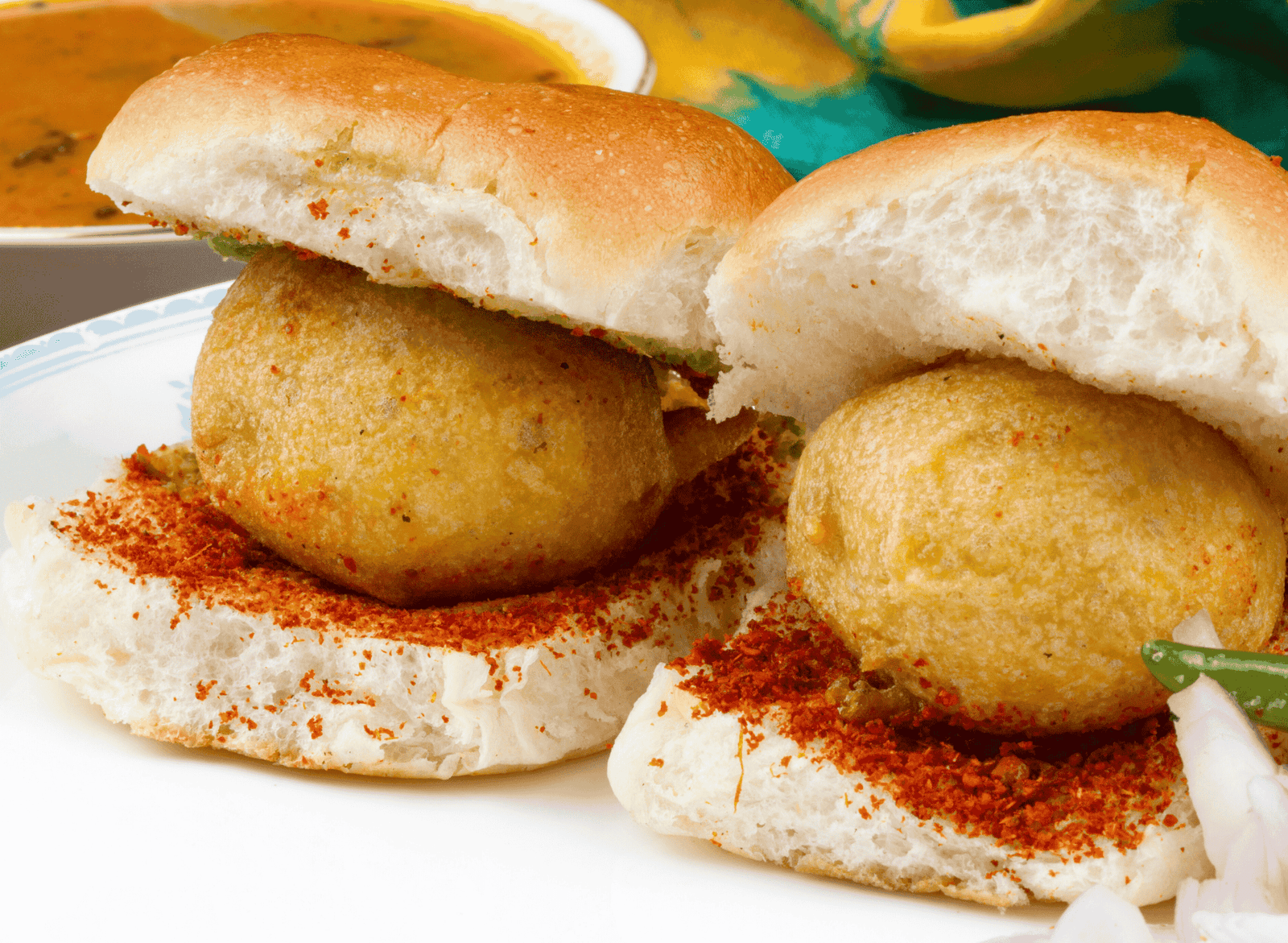
Vada pav consists of a deep-fried potato dumpling, known as batata vada, sandwiched between a soft bread roll called pav. Think of it as India’s answer to the burger, though it predates the global burger chains’ arrival in the country by several decades.
The batata vada forms the heart of this snack. Mashed potatoes get mixed with spices, shaped into rounds, dipped in chickpea flour batter, and fried until crispy and golden. The result is a fritter with a crunchy exterior that gives way to fluffy, well-seasoned potato filling.
The pav, borrowed from Portuguese baking traditions that took root in western India, provides a pillowy soft counterpoint to the crispy vada. These small, slightly sweet rolls get toasted on a griddle with butter, adding another layer of flavour and texture.
Between the vada and pav come the chutneys. Green chutney made from coriander and chilli provides freshness and heat, whilst sweet tamarind chutney adds tangy sweetness. Dry garlic chutney, a Mumbai speciality, contributes fierce pungency that true devotees consider essential.
A whole fried green chilli often accompanies the vada pav, served on the side. Only the brave bite directly into it, though its presence seems mandatory, like a badge of honour for this street food warrior.
Ingredients and Taste
The vada requires boiled potatoes as its base, typically mashed whilst still warm. Fresh curry leaves, mustard seeds, turmeric, green chillies, and ginger create the aromatic foundation. Coriander leaves add freshness, whilst asafoetida brings its distinctive savoury punch.
For the batter coating, gram flour mixed with turmeric, salt, and water creates a smooth paste. Some vendors add a pinch of baking soda for extra crispness. The pav needs no complex ingredients, just soft white bread rolls, ideally from a local bakery.
Green chutney combines coriander, mint, green chillies, garlic, and lime juice. Tamarind chutney needs tamarind pulp, jaggery, and spices like cumin and chilli powder. The garlic chutney blends dried red chillies with copious amounts of garlic and sometimes desiccated coconut.
Your first bite into vada pav delivers an explosion of contrasts. The soft, buttery pav yields immediately, followed by that satisfying crack as your teeth break through the crispy chickpea batter. Inside, the potato filling feels fluffy and light, seasoned warmly with spices that tingle rather than overwhelm.
The chutneys play crucial supporting roles. Green chutney brings herbaceous heat and brightness, cutting through the fried richness. Sweet tamarind chutney offers sticky, tangy sweetness that balances the savoury elements. Garlic chutney, if you’re bold enough, adds fierce intensity that lingers pleasantly.
What strikes you is how well everything works together despite the apparent simplicity. The textures create interest, the spicing provides warmth without aggression, and each component enhances the others. It’s filling without being heavy, flavourful without being complicated.
The experience feels distinctly Indian yet somehow universal. Anyone who has ever enjoyed a good sandwich or burger recognises the fundamental appeal of well-seasoned filling nestled in bread, executed here with Mumbai’s particular genius for bold flavours.
A Taste of History
Vada pav emerged in Mumbai during the 1960s, created out of necessity rather than culinary experimentation. As the city’s textile mills drew workers from across Maharashtra, demand grew for cheap, filling food that could be eaten quickly during short breaks.
Credit for inventing vada pav typically goes to Ashok Vaidya, who set up a stall outside Dadar railway station in 1966. He recognised that mill workers and commuters needed something substantial, portable, and affordable that could compete with the samosas being sold everywhere.
Vaidya took the batata vada, already popular in Maharashtrian cuisine, and had the inspiration to serve it inside a pav. The pav itself had Portuguese origins, introduced to western India centuries earlier and already embraced in local bread making traditions.
His innovation proved brilliant. The combination was filling enough to sustain workers through long shifts, cheap enough for daily consumption, and quick to assemble and eat. Within years, vada pav stalls appeared across Mumbai, each vendor adding personal touches to chutneys and preparation.
The snack arrived during a period when Mumbai was transforming rapidly, its population swelling with migrants seeking opportunities. Vada pav became part of the city’s identity, representing its working class roots and democratic spirit where everyone shared common pleasures.
By the 1970s and 1980s, vada pav had become inseparable from Mumbai’s culture. It fuelled the city’s workforce, featured in Bollywood films, and earned mentions in literature about urban India. What began as workers’ food transcended its origins to become universally beloved.
Today, whilst upscale versions exist in restaurants and chains have attempted to standardise it, the authentic vada pav experience still happens at street stalls. There, vendors maintain traditions passed down through decades, serving this iconic snack exactly as it was meant to be enjoyed.
How to Make Vada Pav (Indian Burger)
Vada Pav, often called the heart of Mumbai street food, is a humble yet bold snack that unites spicy potato filling with a crisp gram flour coating, sandwiched in soft pav bread. Expect golden fritters, fiery chutneys, and an irresistible aroma of fried garlic and chilli. See the recipe card at the bottom for printable directions
Ingredients
For the Potato Filling
- 4 medium potatoes, boiled and mashed
- 1 tbsp oil
- 1 tsp mustard seeds
- 1 sprig curry leaves
- 2 green chillies, finely chopped
- 1 tsp grated ginger
- 1 pinch asafoetida (hing)
- ½ tsp turmeric powder
- Salt to taste
- 2 tbsp chopped fresh coriander
For the Batter
- 1 cup gram flour (besan)
- ¼ tsp turmeric powder
- ½ tsp red chilli powder
- ½ tsp baking soda
- Salt to taste
- Water, as needed for a thick batter
For Assembly
- 4 pav buns (soft bread rolls)
- 3 tbsp green chutney (mint and coriander)
- 3 tbsp tamarind chutney
- 2 tbsp dry garlic chutney (optional but traditional)
- Oil for deep frying
Cooking Instructions
Step 1: Prepare the tempering
Heat oil in a small pan over medium heat. Add mustard seeds and let them splutter. Add curry leaves, green chillies, ginger, and a pinch of asafoetida. Stir until fragrant, then add turmeric and salt.
Step 2: Make the potato filling
Add the mashed potatoes to the pan and mix until well combined with the spices. Stir in fresh coriander and cook for 2–3 minutes. Allow the mixture to cool slightly before shaping.
Step 3: Shape the vadas
Divide the mixture into 4 equal portions and roll them into smooth balls. Keep them aside while preparing the batter.
Step 4: Prepare the batter
In a bowl, combine gram flour, turmeric, red chilli powder, salt, and baking soda. Gradually whisk in water until you achieve a thick, smooth batter that coats the back of a spoon evenly.
Step 5: Coat the vadas
Heat oil for deep frying over medium heat. Dip each potato ball into the batter, ensuring it is evenly coated. Allow any excess batter to drip off before frying.
Step 6: Fry the vadas
Gently place the coated vadas into the hot oil and fry until golden and crisp on all sides, turning occasionally. Drain on kitchen paper to remove excess oil.
Step 7: Prepare the pav
Slice each pav bun horizontally without cutting all the way through. Lightly toast on a tawa (griddle) with a touch of butter for extra flavour.
Step 8: Assemble the vada pav
Spread green chutney on one side of the pav and tamarind chutney on the other. Place a hot vada in the centre and press gently. Sprinkle dry garlic chutney if using.
Step 9: Serve hot
Serve immediately with extra green chillies or fried chilli on the side. Vada Pav is best enjoyed fresh with a cup of masala chai for an authentic Mumbai experience.
Variations and Substitutions
- Pav substitute: Use burger buns or soft dinner rolls if pav is unavailable.
- Chutneys: Ready-made mint or tamarind sauces can replace homemade chutneys.
- Healthier version: Air fry or shallow fry the vadas for a lighter take.
- Spice level: Adjust the number of green chillies to suit your preference.
Cooking Tips for Perfect Vada Pav
- Always fry on medium heat so the vadas cook evenly and remain fluffy inside.
- Mash the potatoes while warm for a smoother filling texture.
- Make the batter just before frying to maintain its lightness.
- Toasting the pav adds flavour and helps it hold the chutneys better.
How to Store and Reheat
Storing Vada Pav Components
Vada pav tastes best fresh, but you can store components separately for later assembly. Keep fried vadas in an airtight container at room temperature for up to one day, though they’ll lose crispness. Refrigeration makes them soggy, so avoid it unless absolutely necessary.
Store pav in a bread box or sealed bag at room temperature for one to two days. Keep chutneys in separate airtight containers in the refrigerator, where they’ll last three to four days. Never store assembled vada pav, as the bread becomes unpleasantly soggy.
Reheating for Best Results
To revive vadas, your oven works better than a microwave. Preheat to 180°C and place vadas on a baking tray. Heat for eight to ten minutes until they crisp up again. An air fryer works brilliantly too, taking just five to six minutes at 180°C.
Toast the pav fresh on a griddle or tawa with a little butter, just as vendors do. This takes only a minute or two and makes all the difference to the final result. Microwaving pav makes it chewy and tough, so always opt for stovetop toasting instead.
Assembly Tips
Assemble vada pav immediately before eating. Spread your chutneys on the toasted pav whilst it’s still warm, nestle the reheated vada inside, and enjoy straight away. The brief window between assembly and consumption matters enormously for texture and overall enjoyment.
If you’ve made vadas ahead for a gathering, keep them warm in a low oven rather than letting them cool completely. This preserves texture better than the reheat cycle. Likewise, toast pav in batches as needed rather than preparing everything at once.
Indian Vada Pav (Indian Burger)
Ingredients
For the Potato Filling
- 4 medium potatoes boiled and mashed
- 1 tbsp oil
- 1 tsp mustard seeds
- 1 sprig curry leaves
- 2 green chillies finely chopped
- 1 tsp grated ginger
- 1 pinch asafoetida hing
- ½ tsp turmeric powder
- Salt to taste
- 2 tbsp chopped fresh coriander
For the Batter
- 1 cup gram flour besan
- ¼ tsp turmeric powder
- ½ tsp red chilli powder
- ½ tsp baking soda
- Salt to taste
- Water as needed for a thick batter
For Assembly
- 4 pav buns soft bread rolls
- 3 tbsp green chutney mint and coriander
- 3 tbsp tamarind chutney
- 2 tbsp dry garlic chutney optional but traditional
- Oil for deep frying
Instructions
- Heat oil in a small pan over medium heat. Add mustard seeds and let them splutter. Add curry leaves, green chillies, ginger, and a pinch of asafoetida. Stir until fragrant, then add turmeric and salt.
- Add the mashed potatoes to the pan and mix until well combined with the spices. Stir in fresh coriander and cook for 2–3 minutes. Allow the mixture to cool slightly before shaping.
- Divide the mixture into 4 equal portions and roll them into smooth balls. Keep them aside while preparing the batter.
- In a bowl, combine gram flour, turmeric, red chilli powder, salt, and baking soda. Gradually whisk in water until you achieve a thick, smooth batter that coats the back of a spoon evenly.
- Heat oil for deep frying over medium heat. Dip each potato ball into the batter, ensuring it is evenly coated. Allow any excess batter to drip off before frying.
- Gently place the coated vadas into the hot oil and fry until golden and crisp on all sides, turning occasionally. Drain on kitchen paper to remove excess oil.
- Slice each pav bun horizontally without cutting all the way through. Lightly toast on a tawa (griddle) with a touch of butter for extra flavour.
- Spread green chutney on one side of the pav and tamarind chutney on the other. Place a hot vada in the centre and press gently. Sprinkle dry garlic chutney if using.
- Serve immediately with extra green chillies or fried chilli on the side. Vada Pav is best enjoyed fresh with a cup of masala chai for an authentic Mumbai experience.